
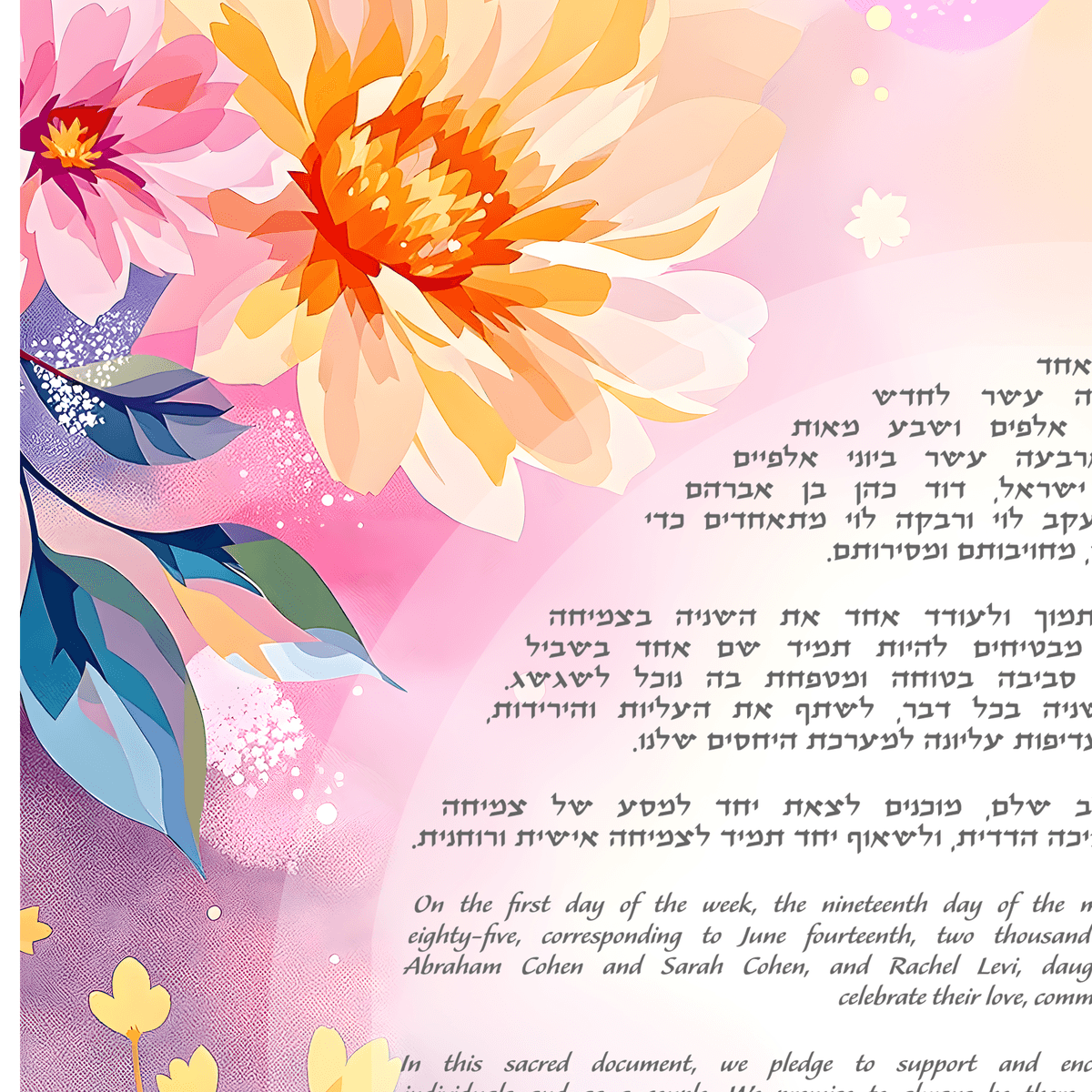
What Is the Ketubah Signing?
The ketubah signing is a brief ceremony that typically takes place 30 to 60 minutes before the main wedding. It's usually private — just the couple, their witnesses, the officiant, and perhaps a small circle of close family or friends. For many couples, it turns out to be one of the most emotionally significant moments of the entire day.
Unlike the wedding ceremony itself, which is choreographed for an audience, the signing is intimate and relatively unscripted. It's the moment the day starts to feel real. Give it space.
Who Signs the Ketubah?
The witnesses
Technically, a ketubah only requires two witnesses to be valid — the couple doesn't need to sign at all for the document to be legally and religiously binding in Jewish tradition. The witnesses' signatures are what make it official.
Who qualifies as a witness varies significantly by denomination and by your specific officiant:
- Orthodox: Witnesses must be adult, observant Jewish men who are unrelated to either partner and to each other.
- Conservative: Policies vary by synagogue and rabbi. Many now permit female witnesses; some still follow earlier requirements.
- Reform and Reconstructionist: Witnesses are generally welcome regardless of gender, and some officiants will permit non-Jewish witnesses as well.
- Non-denominational and civil ceremonies: Requirements depend entirely on your officiant.
The right person to ask is always your rabbi, cantor, or officiant — not a relative who had a Jewish wedding twenty years ago, and not online forums. Witness requirements are one of the areas where the gap between traditions is significant and the stakes are real.
The couple
Many couples choose to sign the ketubah themselves, and it's become common practice even when it's not technically required. Some couples sign alongside the witnesses; others prefer to be the first names on the document. Talk to your officiant about what order feels meaningful and what they're comfortable with. If you both want to sign, say so — most officiants will accommodate it.
Additional signers
Some officiants allow three or four witnesses rather than just two, which gives you room to honor additional people. If there's someone you want involved who may not technically meet the formal requirements — a close non-Jewish friend, a family member with special significance — ask your officiant about including them as a secondary or symbolic signer. Many clergy will find a way to make space for people who matter to you.
How to Choose Your Witnesses
Most couples choose close friends — people who feel woven into the story of the relationship. Some choose mentors, former teachers, or the person who introduced them. There's no wrong answer beyond the denominational requirements, and the choice itself becomes part of the story.
A few practical notes: tell your witnesses well in advance exactly what's expected and where to be. Specify a room and a time. The signing ceremony frequently gets delayed because a witness wandered off during cocktail hour or didn't realize they needed to be somewhere specific before the ceremony started. Clear instructions and a reminder closer to the date go a long way.
What Happens During the Signing
The officiant leads the ceremony. They'll gather everyone in a quiet room, read or translate the ketubah text, and guide the signing. The whole thing usually takes 10 to 20 minutes, depending on how much text is read and whether anyone wants a moment to speak.
Depending on your denomination and the text you chose, the officiant may read the Hebrew aloud, the English translation, or both. Some couples ask the officiant to briefly explain the meaning before the signing, which can be particularly meaningful for guests who are less familiar with the tradition.
After the signatures are in place, the ketubah is typically handed to a designated person to hold safely through the rest of the day — someone trusted who isn't in the main wedding party and won't be distracted. Choose this person deliberately and tell them exactly what you need from them.
Making the Signing Feel Like Your Own
The signing has enough structure that it feels intentional, but enough openness that small personal touches go a long way:
- Ask someone meaningful to read a poem or short passage after the signing, before everyone disperses
- Choose a room that feels special — not just a back hallway or a storage room at the venue
- Take a few minutes before the signing for just the two of you, without phones or vendors
- Keep the group small — 10 to 15 people maximum — to preserve the intimacy of the moment
- If you have guests who aren't Jewish and may not know what they're witnessing, a brief explanation at the start makes them feel included rather than like bystanders
What couples consistently say afterward is that they wish they had spent more time in that room, not less. It's quieter than everything that follows, and it won't happen again.